About Manual Surface Grinding Machine
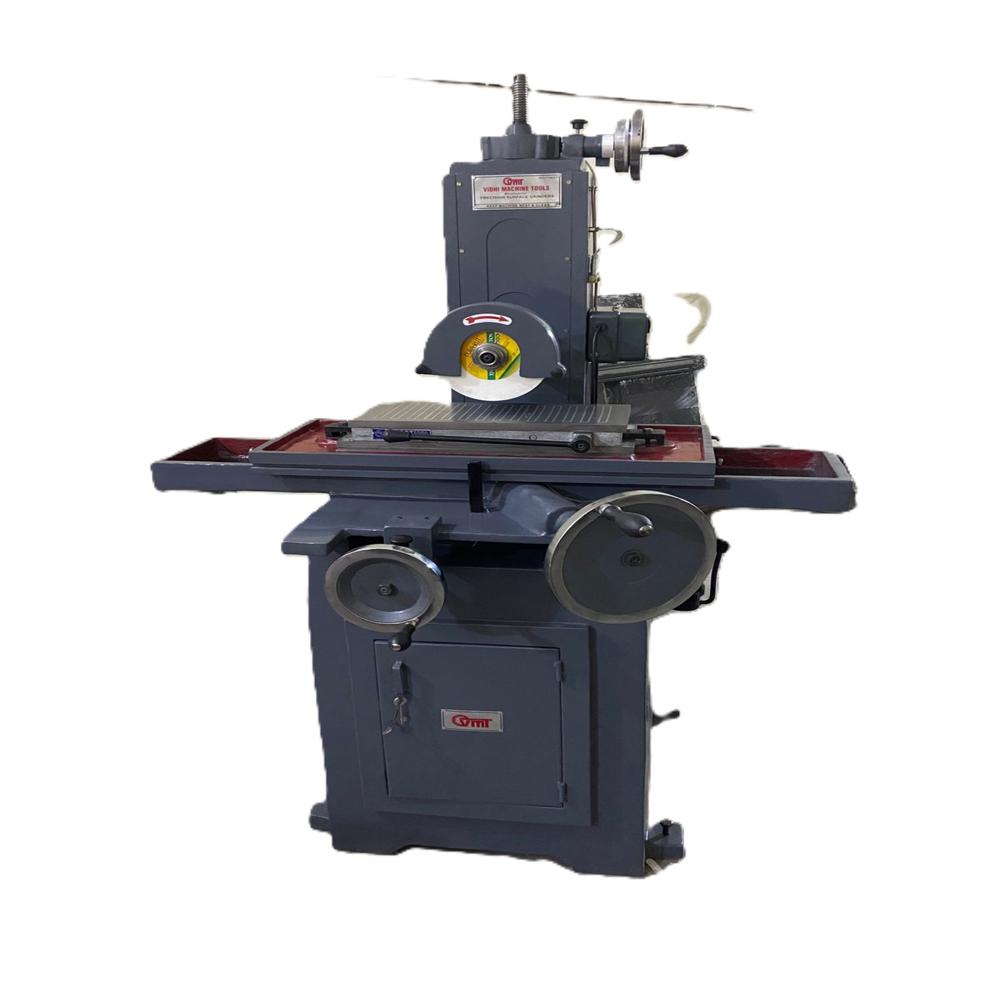
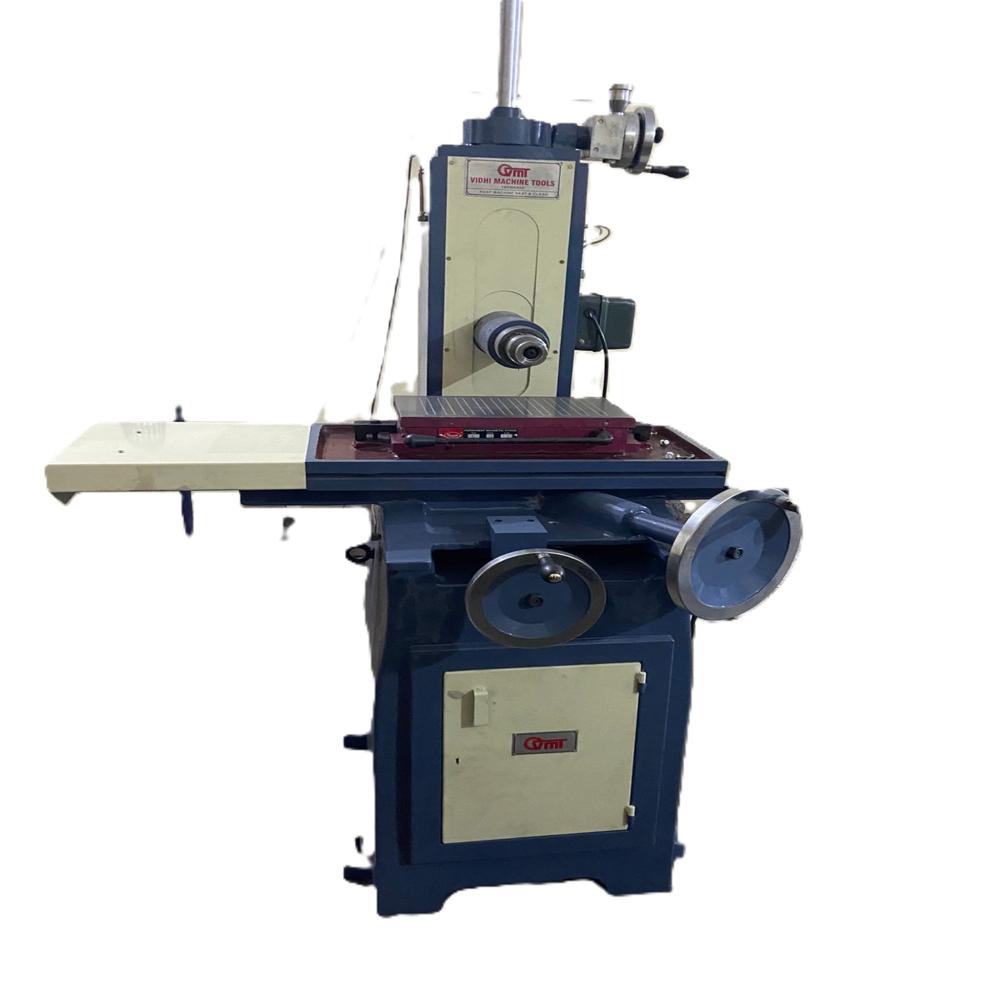
A manual surface grinding machine is a precision machine tool used to produce flat, smooth, and accurate surfaces on metal or non-metal workpieces by means of a rotating abrasive wheel. It is manually operated, meaning the movements of the table and wheel are controlled by the operator rather than by CNC automation.
Main Components
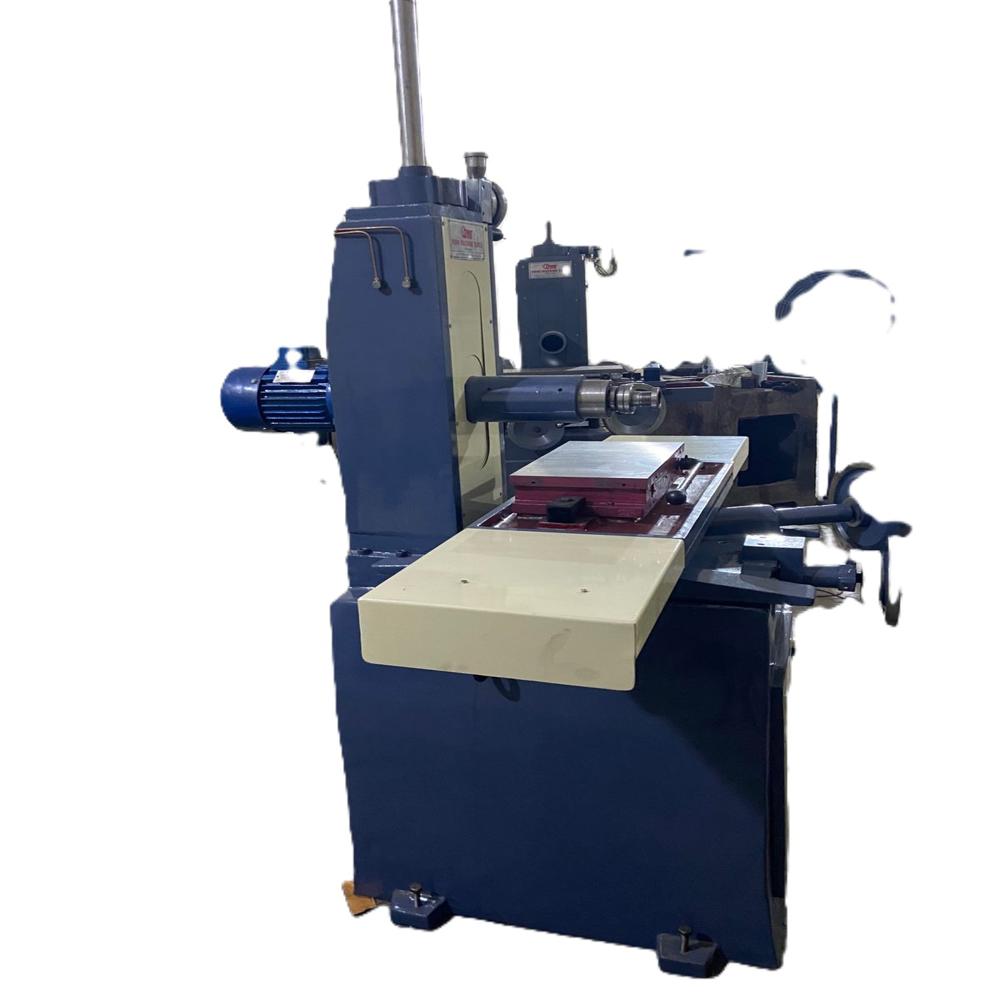
- Base : Heavy cast iron structure that supports the entire machine and absorbs vibration.
- Column : Vertical structure mounted on the base that supports the wheel head assembly.
- Saddle : Mounted on the base and moves in and out (cross feed).
- Table (Reciprocating Table) : Moves left and right (longitudinal feed). The workpiece is clamped here, usually on a magnetic chuck.
- Magnetic Chuck : Holds ferromagnetic workpieces firmly during grinding.
- Wheel Head : Contains the grinding wheel and spindle. Moves vertically to control depth of cut.
- Grinding Wheel : A rotating abrasive wheel that removes material from the surface of the workpiece.
Working Principle
The grinding wheel rotates at high speed while the workpiece is held securely on the magnetic chuck.
- The table reciprocates back and forth (manual or hydraulic movement).
- The cross feed moves the workpiece sideways gradually.
- The vertical feed controls the depth of cut.
Material is removed in very small amounts, producing a smooth and accurate surface finish.
Types of Movements in Manual Surface Grinder
- Longitudinal movement Handwheel or hydraulic control
- Cross movement Manual handwheel
- Vertical movement Manual handwheel for depth adjustment
- Applications
-
- Producing flat and parallel surfaces
- Finishing hardened materials
- Tool and die making
- Precision engineering components
- Machine parts finishing
Advantages
- High dimensional accuracy under 10 micron
- Excellent surface finish
- Simple construction
- Lower cost compared to CNC grinders
- Easy maintenance
Limitations
- Requires skilled operator
- Slower than automatic/CNC machines
- Limited to flat surfaces (mostly)
Precision Performance for Workshop NeedsDesigned for optimal manual operation, this surface grinding machine delivers reliable accuracy and consistent surface finish, thanks to robust engineering and precise controls. Its substantial table travel and grinding wheel dimensions make it suitable for a range of tasks from toolroom to maintenance jobs. Crafted with durable materials, the machine ensures longevity and minimum maintenance, making it a worthy addition for suppliers and traders demanding quality results in every grinding operation.
Advanced Features Enhance UsabilityFrom the three-axis manual handwheels for precise adjustments, to the included manual magnetic chuck and built-in coolant system, every feature is tailored for operator ease and enhanced productivity. Its capacity to process small to medium metal components makes it versatile across various workshop applications. With a sturdy build and stable 600 kg frame, vibration is minimized during operation, ensuring superior surface quality and extended tool life.
FAQ's of Manual Surface Grinding Machine:
Q: How do I operate the manual surface grinding machine for best results?
A: Begin by securely mounting the metal workpiece on the manual magnetic chuck. Adjust the three-axis handwheels to position the table and grinding head as needed. Activate the spindle, ensure the coolant system is running, and steadily move the table using the handwheels for even grinding. Always observe safety protocols and reference the machine guide for optimal use.
Q: What types of components is this surface grinding machine suitable for?
A: This machine is designed for manual surface grinding of small to medium-sized metal components, making it ideal for toolrooms, repair shops, and manufacturing processes requiring high-precision surface finishes.
Q: When should the coolant system be used during operation?
A: The coolant system should be engaged whenever the grinding wheel is in use, especially during prolonged or high-precision grinding sessions. This helps prevent overheating, maintains component integrity, and extends both wheel and workpiece lifespan.
Q: Where is the surface grinding machine best suited for installation?
A: It is best placed in a well-ventilated workshop environment with access to three-phase 415V AC power. Ensure the area is level and spacious enough to accommodate the machine's dimensions and operational movements.
Q: What benefits does the manual magnetic chuck provide?
A: The manual magnetic chuck securely holds metal workpieces in place during grinding, ensuring stability and precision for each operation. This enhances safety and reduces the risk of workpiece movement or errors.
Q: How does the machine maintain high accuracy and surface quality?
A: The machine's sturdy construction, precise table and cross travels (450 mm and 225 mm respectively), and rigid handwheel controls enable micron-level accuracy (up to 0.01 mm), delivering consistently fine surface finishes on various metals.



 Send Inquiry

 Send Inquiry
 Send Inquiry
 Send SMS